
How did we do it?

How did we do it?

Let's go back to the beginning when the garden was just a thought in my head.

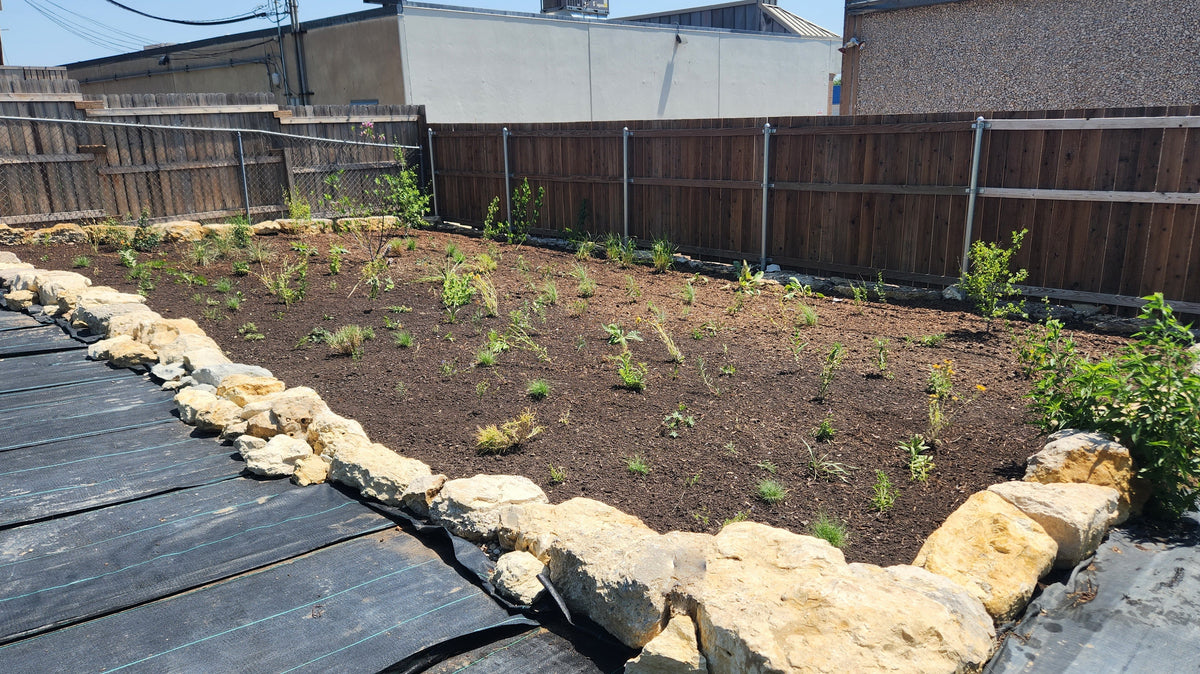
Our property is all on a slope - the back fence line being the lowest spot. The area I chose for the garden turned from a relatively mild slope to a steep slope halfway through where the bed was placed. This location was chosen on purpose - this was otherwise unusable area of the shop due to the steep slope. 

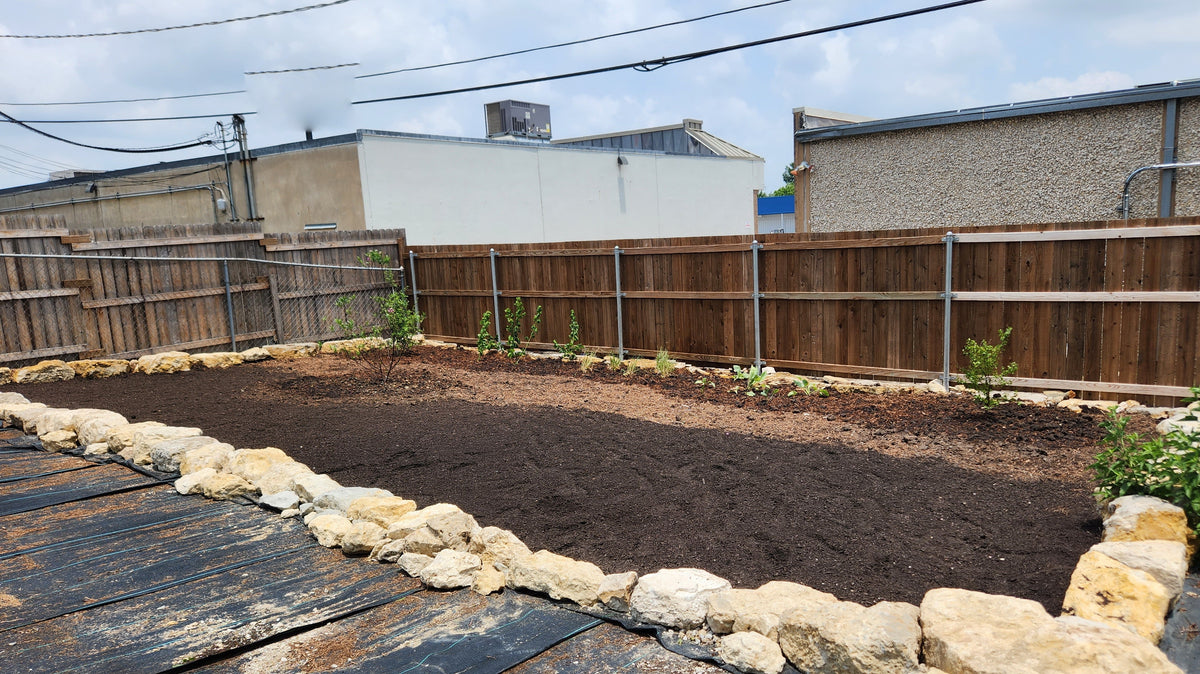
Since the area was full of non-native weeds (Bermuda grass, non native bindweed and nutsedge mostly), they needed to be eradicated before any planting could take place. The area was already covered with ground fabric and we added with approx. 6-8 inches of cedar mulch on top of it and left it there for about a year and a half. The bed was lined with native limestone for both practical (height, separation) and aesthetic reasons. Once we were ready to prep the area, the ground fabric and a bit more than half of the mulch was removed. We added compost and some humates to the rest of the mulch, and the bed was ready for planting.

There are of course many different ways to prep your garden area. This was just the easiest, most sustainable way for us to do it.  It also allowed us to level this part of the property to some extent. It is still on a slope, but it is not nearly as steep as it used to be. 

Raising the garden also meant improved drainage. Soil at the shop is fairly heavy clay loam. Adding compost on top meant that even in the event of lots of rainfall, the water never sat at the plant root crown level. 


January 15, 2026 — Anna Hurst
The beginning

The beginning

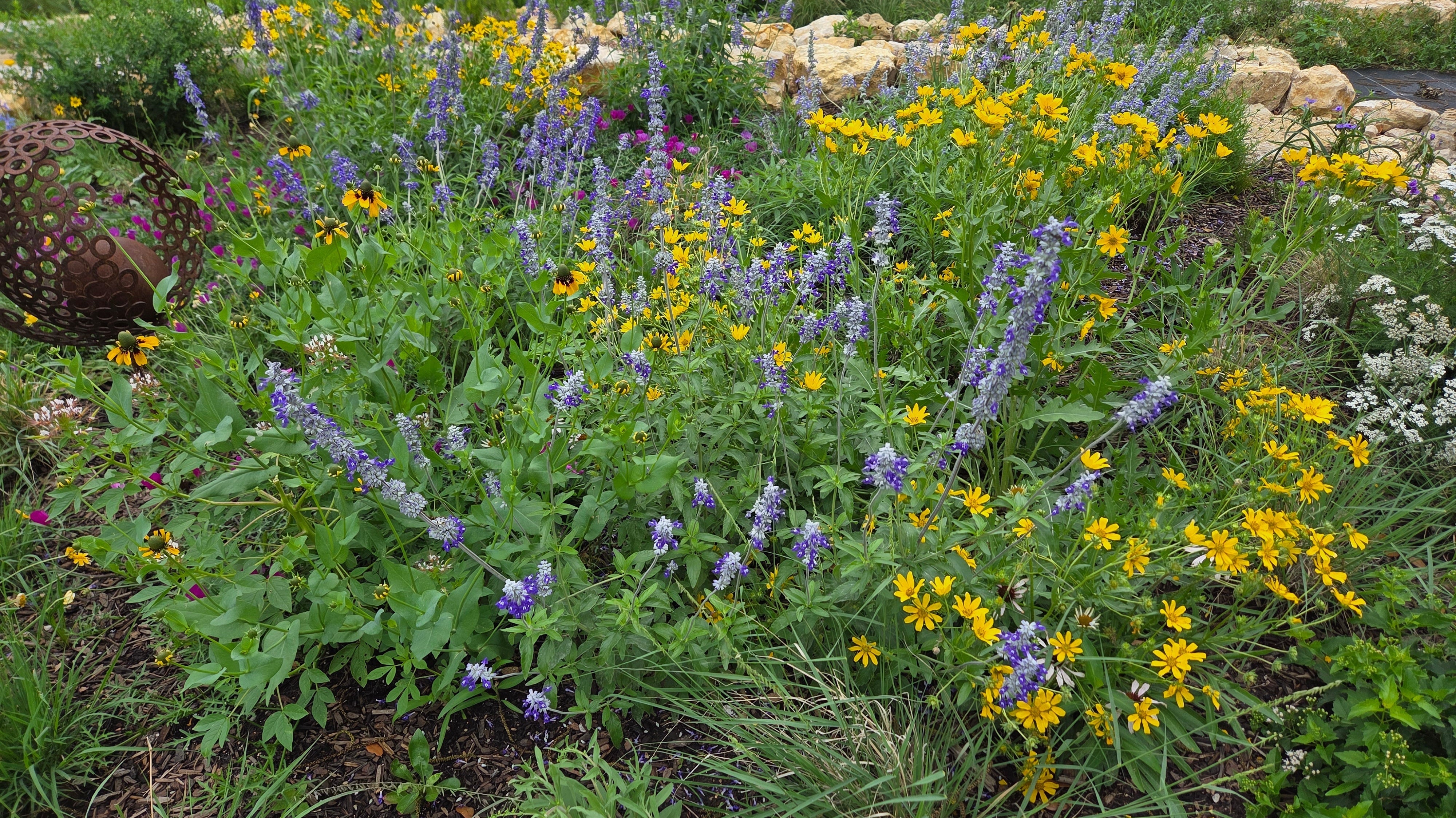
Well before I started any planting, there was a thought... an idea. And the excitement that it brought. To change this green piece of desert that was mostly Bermuda grass and other non-native weeds into a native pollinator haven. To have color, texture, movement and most importantly life in this neglected, boring, utilitarian property.

(Photo above shows the bed right after planting. This was the end of June 2023. It was a very hot and dry summer. Most days were well above 100 degrees Fahrenheit. )

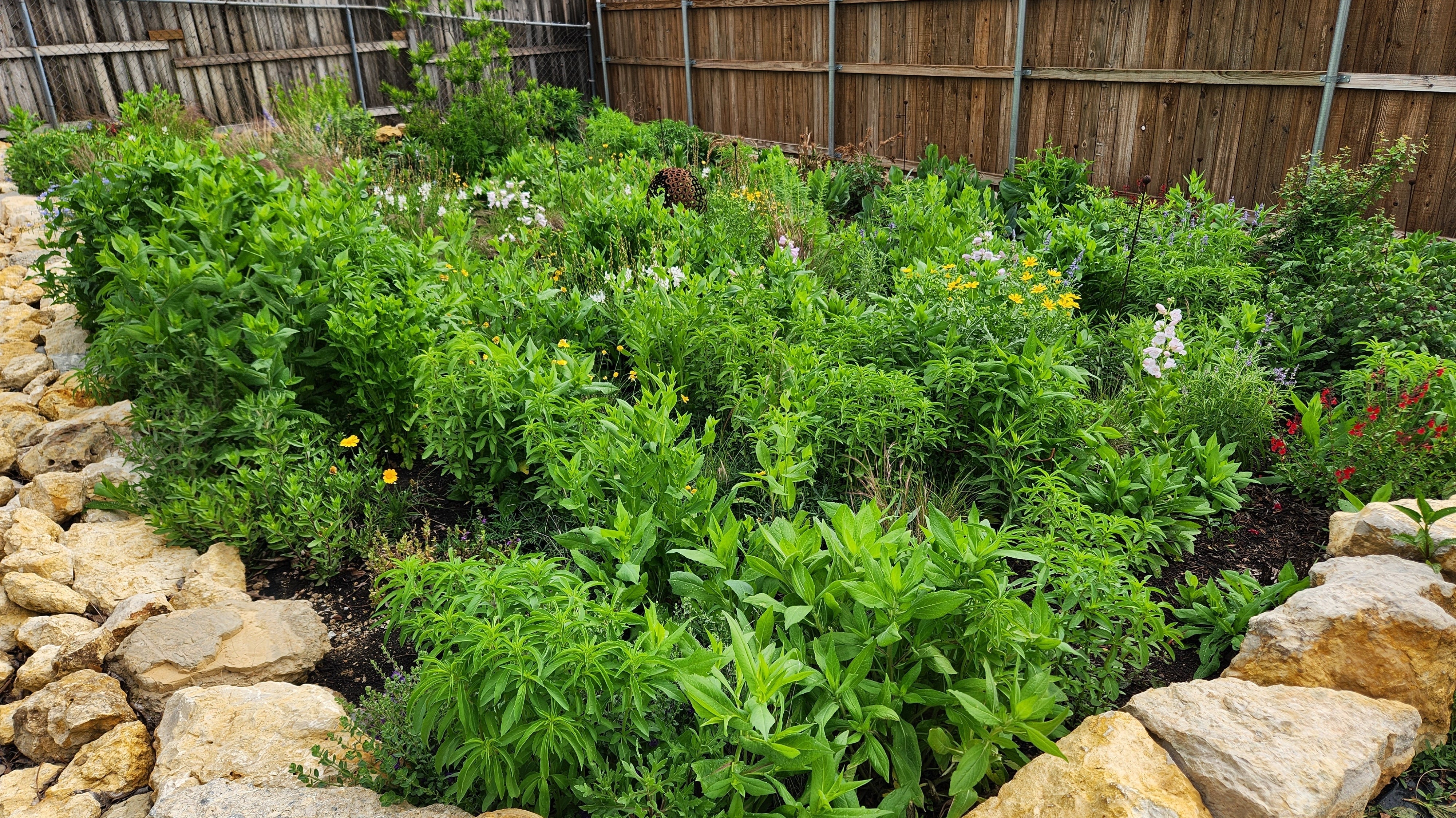
Perennial beds are often anti-climactic at the time of planting since the plants are small and if spaced appropriately, the end result may seem sparse. But that changes quite quickly. Only 3.5 months after planting and the bed was already looking fuller (photo below was taken in mid September 2023).

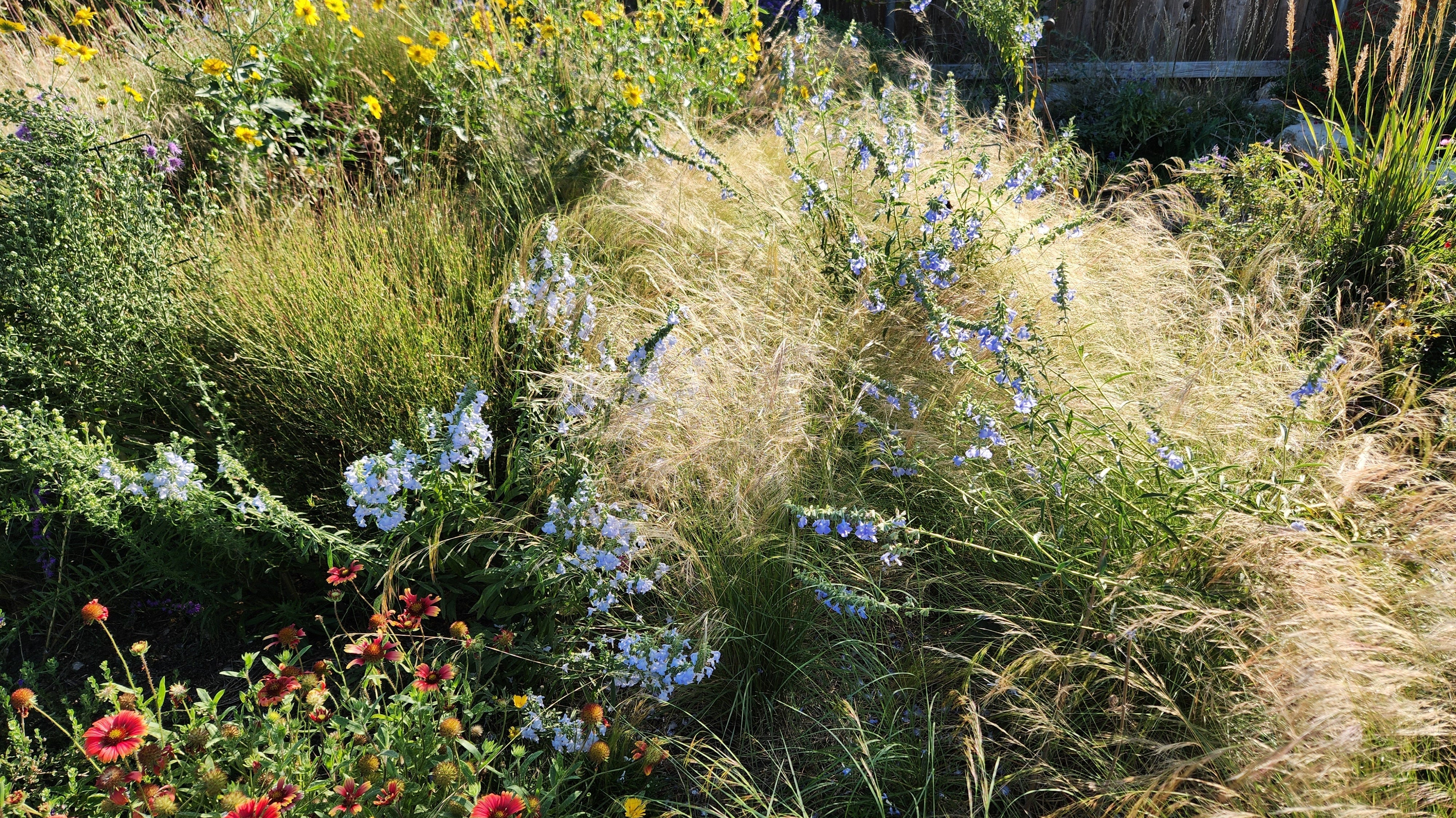
In October more blooms popped up as some summer blooming plants gave way to fall bloomers (photo below was taken in the second part of October 2023).

It was actually very satisfying seeing it go through the first (very tough!) summer and then fall.  Seeing it change and grow was joyful. There was of course maintenance involved (mostly watering given the weather) but it was also so fun.

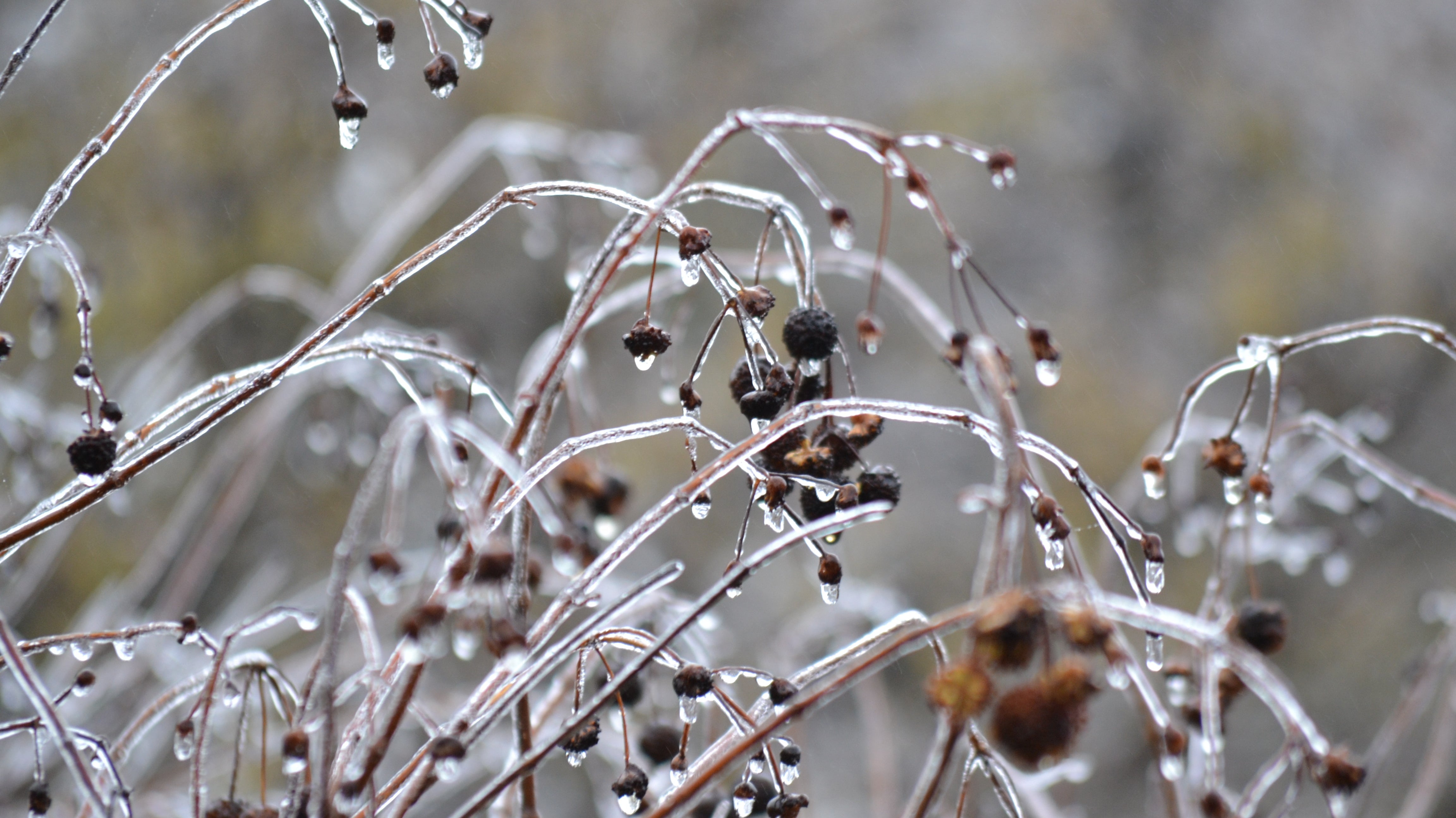
The winter was relatively mild and wet. It was nice to see some grasses and perennials already adding color and texture to the winter landscape. (Photo below was taken in mid December 2023).

January 14, 2026 — Anna Hurst